Marissa Kent

Nutrition for Life

  • Email
  • LinkedIn
  • Twitter
  • Home
  • About
  • Services
  • Scheduling
  • Resources
  • Blog
  • Recipes
  • Contact

Start Your Path to Wellness

Sign up for my newsletter to get free healthy tips and recipes delivered to your email.

Halloween Candy & Children

Oct 262015 by Elise Harlow // Leave a Comment

Halloween Candy & Children

trick or treat
With Halloween right around the corner, I am sure you’re kids are excited for costumes, trick-or-treating and candy! This also means that your kids may be coming home with bags full of
candy which means you are left with the task of figuring out the best way to deal with Halloween candy and your child. This post will help you in doing so!

Ellyn Satter (visit her website for lots of great information & resources), Registered Dietitian and Family Therapist, is an internationally recognized authority on eating and feeding. Ellyn Satter created the Division of Responsibility in Feeding, which discusses the role that both children and parents play in feeding children.  In summary, the Division of Responsibility in Feeding states that:

It is the parent’s responsibility to determine what the child will eat

&

It is the child’s responsibility to determine how much they will eat.

In the book, Your Child’s Weight: Helping without Harming, Ellyn Satter discusses how to deal with Halloween candy and your child. Below you will find some of the highlights:

  1. Halloween can be a learning opportunity for your child
  • “Work towards having your child be able to manage his own stash”. This means, for the night of and day after trick-or-treating, let your child play with their candy, count their candy, sort their candy and eat as much as they want. After two days of this, your child is allowed to have candy at meal time and snack time If your child follows the rules, then they can be in charge of their candy stash. If not, the parent is in charge of the candy stash.
  1. Sugar & Behavior
  • While research does not indicate that sugar affects children’s behavior or cognition, anecdotal observations have suggested otherwise. Therefore, to ensure the child is receiving nutrients from sources other than candy, it is important that the parent maintains meal and snack time structure as discussed in the Division of Responsibility.
  1. Preserve the joy of Halloween
  • For some children, Halloween is their favorite holiday. This makes it especially important for parents to not be overly-concerned about sugar and let your child enjoy the holiday.

Sources & more information
The Ellyn Satter Institute

Categories // Uncategorized

Everything Pumpkin!

Oct 202015 by Elise Harlow // Leave a Comment

Everything Pumpkin!

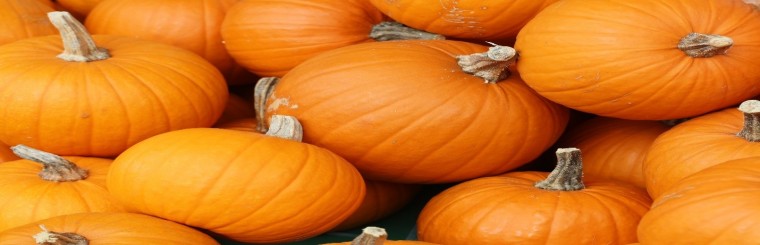
With the arrival of October and fall weather, this also signifies the arrival of pumpkin flavored everything! In accordance with the change of seasons and grocery store isles, this blog post is dedicated to everything pumpkin as well.

From pumpkin soup to pumpkin ice cream, pumpkin is quite the versatile flavor and can be found in almost any isle of the grocery store this time of year.

Lucky for pumpkin, it’s not all about the taste- pumpkin also has many rewarding nutritional qualities. Pumpkin contains the following nutrients:

  • Beta-carotene
    • Beta-carotene is responsible for the bright orange color of pumpkin & is converted to vitamin A in the body. This antioxidant is important for healthy skin and vision. Research also indicates that diets rich in beta-carotene may be protective against some cancers.
  • Fiber
    • Fiber is important in promoting normal digestion and bowel movements, improving the gut microbiome (see previous post here), and weight maintenance. ½ cup of canned pumpkin provides 16% of the daily recommended amount.
  • Vitamin C
    • Vitamin C is important in maintaining a healthy immune system (especially during flu season!), wound healing, and maintaining healthy cartilage.
  • Potassium
    • Potassium is important for muscle contraction, fluid and mineral balance and maintaining normal blood pressure. Potassium may reduce your risk of kidney stones and possible bone loss that occurs with aging.

Ways to embrace this fall favorite and to boost nutritional value of foods:

  1. Add a scoop of canned pumpkin to your oatmeal, top with pecans & a sprinkle of cinnamon and nutmeg
  2. Pumpkin yogurt parfait (see below for recipe)
  3. Pumpkin smoothie
  4. Pumpkin bread, muffins & pancakes (try using whole wheat flour for even more beneficial nutrients)
  5. Pumpkin soup
  6. Pumpkin granola (try adding this to the pumpkin yogurt parfait!)
  7. Pumpkin oatmeal cookies

TIP: When choosing canned pumpkin, be careful to choose canned pumpkin that does not have any added sugars. To make sure you are purchasing real pumpkin look on the label for:

“100% pure pumpkin”
&
Ingredients: pumpkin

Pumpkin Yogurt Parfait

Ingredients
½ cup plain Greek yogurt
½ cup 100% pure canned pumpkin
¼th cup pumpkin granola
½ teaspoon ground ginger
½ teaspoon ground cinnamon
¼ teaspoon ground nutmeg
1 banana, sliced
Drizzle of honey

Directions

In a small alternate between layers of yogurt, sliced bananas and pumpkin puree until all yogurt and pumpkin puree have been used. Top with granola, ginger, cinnamon, nutmeg and a drizzle of honey & enjoy!

Sources
Eatright.org

Categories // Uncategorized

DASH Diet

Oct 142015 by Elise Harlow // Leave a Comment

DASH Diet

The DASH (Dietary Approached to Stop Hypertension) diet is an eating plan that was first developed in 1995 to treat patients with high blood pressure. The diet is rich in fruits and vegetables, low-fat and nonfat dairy, whole grains, poultry, fish, nuts, beans and seeds & rich in magnesium, calcium and potassium.

 The basics of the DASH eating principles:

Sodium
 Less than 2,300mg per day

Grains
6-7 servings per day
Focus on whole grains versus refined grains. Whole grains include foods such as brown rice, whole wheat bread & bread products, quinoa, whole wheat pasta, oats, quinoa, barley, buckwheat, etc. For a complete list of whole grains click here.

Vegetables
4-5 servings per day
Use vegetables as more than just a side dish. Make vegetables the focus of meals.

Fruits
4-5 servings per day
Fruits make great snack and dessert options.

Dairy
2-3 servings per day
Make sure to choose low fat or nonfat dairy options. Be sure to watch the sodium content of cheeses, as they tend to be high.

Lean meat, poultry, & fish
6 or fewer servings per day
1 serving of protein equals 1oz.
2-3oz is about the size of a deck of card. Be sure to watch portion sizes here. 

Nuts, seeds, & legumes
4-5 servings per week
Nuts seeds and legumes are full of fiber, healthy fats and plant chemicals that protect against cardiovascular disease. Serving sizes are small and intended to be consumed weekly as these foods can be high in calories.

Fats & oils
2-3 servings per day
Focus on monounsaturated fats such as vegetable oils.

Sweets
5 or fewer per week

Alcohol
Men: less than 2 drinks per day
Women: less than 1 drink per day

The DASH diet was originally developed for the sole purpose of lowering blood pressure. However, recent research has indicated that the DASH diet can be beneficial in other health conditions such as achieving weight loss, overall heart health and polycystic ovarian syndrome (PCOS).

DASH diet & Weight Loss
The DASH diet has been associated with reduced waist circumferences and body weight. Both of which are indicators of various different obesity related health conditions. By maintaining a healthy body weight and waist circumference, risk of cardiovascular disease and metabolic disorders is greatly reduced.
DASH diet & Cardiovascular Disease
Research has found that following the DASH diet can have beneficial effects on blood pressure in as little as two weeks. In addition to the original intent of lowering blood pressure, the DASH diet has also been found to lower homocysteine levels and LDL cholesterols. High levels of both homocysteine and LDL cholesterol associated with an increased risk of heart disease, stroke, and peripheral vascular disease.
DASH diet & Diabetes
The high amounts of calcium, magnesium, fiber, and low amounts of saturated fat, the DASH diet has been found to be beneficial in improving insulin resistance for individuals for individuals with type 2 diabetes.
DASH diet & PCOS
Polycystic ovarian syndrome (PCOS) is a hormonal endocrine disorder seen in women. PCOS has been associated with an increased risk for insulin resistance, type 2 diabetes, high cholesterol, high blood pressure and heart disease. Research has indicated that the DASH diet can improve insulin resistance, reduce inflammation, and abdominal fat in overweight or obese women with PCOS.


Ultimately, recent research is indicating that the DASH diet can provide benefits to the general population in all stage of life. Try the recipe below to incorporate more of the DASH principles into your own eating!


DASH Approved Recipe- Apple Spiced Oatmeal

Recipe from: dashdietoregon.com (adapted from foodhero.org)

Ingredients
1 egg, beaten
1⁄2 cup applesaucebaked oatmeal
1 1⁄2 cups non-fat or 1% milk
1 teaspoon vanilla
2 tablespoons oil
1 apple, chopped (about 1 1/2 cups)
2 cups rolled oats
1 teaspoon baking powder
1⁄4 teaspoon salt
1 teaspoon cinnamon

Topping
2 tablespoons brown sugar
2 tablespoons chopped nuts
Directions

  • Preheat oven to 375 degrees. Lightly oil or spray an 8 inch by 8 inch baking pan.
  • Combine the egg, applesauce, apple, milk, vanilla, and oil in a bowl.
  • In a separate bowl, mix the rolled oats, baking powder, salt and cinnamon.
  • Add to the liquid ingredients and mix well.
  • Pour mixture into baking dish and bake for 25 minutes.
  • Remove from oven and sprinkle with brown sugar and nuts. Return to oven and broil for 3 to 4 minutes until top is browned and the sugar bubbles. (Keep an eye on it during this step to keep it from burning).

Cut into 9, 2.5 inch by 2.5 inch squares. Serve warm. Refrigerate leftovers within 2 hours.
 

Nutrition Information: 
Per serving: 160 calories, 6 g total fat, 0.5 g saturated fat, 22 g carbohydrates, 6 g protein, 3 g fiber, 150 mg sodium, 69 mg calcium, 30 mg potassium, 4 mg magnesium.

For more DASH approved recipes and resources, visit the dashdietoregon.org

Sources
Foodhero.org
Nutrition Education Services/Oregon Dairy Council
Haghighatdoost, F., Onvani, S., Azadbakht, L. (2015). Dietary Approaches to Stop Hypertension (DASH) Eating Plan: Beyond the Hypertension. Nutrition and Food Sciences Research 2(1).
National Heart, Lung, and Blood Institute
PCOSfoundation.org
Whole Grains Council

Categories // Uncategorized

  • « Previous Page
  • 1
  • …
  • 9
  • 10
  • 11
  • 12
  • 13
  • Next Page »

Testimonials

Thank you for your encouraging words and not overwhelming me.

Appointments

Click here to request an appointment.

Contact

Marissa Kent Nutrition
Marissa Kent, MS, RDN, CDE

  • 26461 Crown Valley Pkwy, Suite 100
    Mission Viejo, CA 92691
  • (949) 415-4397
  • (949) 258-5508
  • marissa@marissakentnutrition.com

Latest Posts

Summertime

    Baby It’s Hot Outside Aww, July! It’s the month … [Read More...]

NEW: Cookbook for Newly Diagnosed Diabetes

Congratulations to my friend Lori at @LoriZaniniNutrition on her new … [Read More...]

Latest Pins

Copyright © 2026 Marissa Kent. Website by N.Creatives